

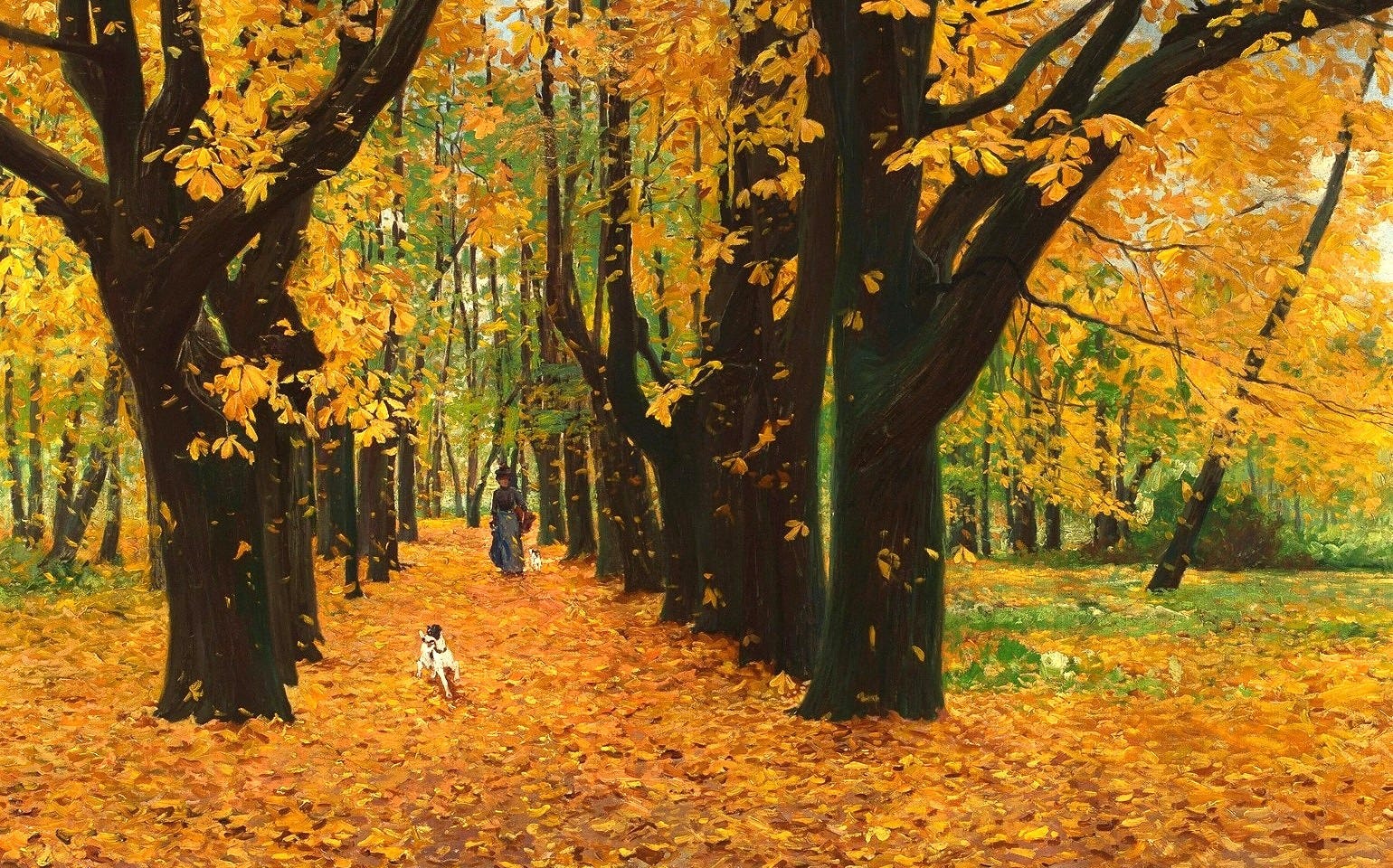
Summer is finally over—you should celebrate this. Fall starts to show itself vividly. Melancholia and introspection kick in. Summer is a distraction. The sun and the cocktails provide you with an overrated sense of optimism. You go to Spain or the Greek islands. You bounce from one music festival to the next. But now the spiritual challenge begins. Christmas is too far away to use as the next escape. You have no choice but to contemplate your life. Contemplate your values. Contemplate your regrets. Contemplate your sources of meaning. Contemplate what you’re avoiding. Contemplate who you’re becoming. It’s time to dig into the depths of your soul.
One common sin nowadays is the incapacity to contemplate in times of crisis or when dealing with challenges of any sort. Such people will do anything: drink and smoke excessively, numb themselves with entertainment, become irascible and mean, buy a new car, cheat on their partner, yell at their kids, bury themselves in empty work and trivial tasks—anything but contemplate their misery. They want to forget their anguish; they want revenge. They avoid a spiritual battle only to be dragged into a full-scale war. Without contemplation, thus without further suffering, they cannot transcend it.
Contemplation isn’t just thinking. While thinking relies heavily on reason, contemplation goes beyond reason and merely uses it as an instrument to reach higher dimensions. Contemplation also far exceeds reflection. Reflection is concerned with first-order effects while contemplation with second- and third-order effects. Contemplation is an act in which consciousness is transfigured. Contemplation is thus not psychological but strives to be religious. The root of the word contemplation is templum—which means a sacred space reserved for “watching the signs of the divine,” as Sherry Ning eloquently puts it. The prefix con- means “with.” To contemplate is to become one with the temple. In contemplation, time is dilated and partially suspended, withdrawing from chronology; space gets charged with electricity, and the soul is overwhelmed with awe and meaning.1
Read voraciously
Fall is my favorite season to double down on reading but it doesn’t happen because I set it as a goal; it’s a by-product. I read voraciously, but only what I like, lately more poetry and fiction yet philosophy remains my core interest.
Something that frustrates me about our optimization culture maybe more than anything is the growing inability to read just because. We no longer read books to feel something, experience higher pleasures, soothe the heart, or edify the soul, but to “learn” something new—this is a subtle sign of cultural decline. I seldom read to learn; if anything, I read to forget. It’s therapeutic, not productive.
Are you addicted to self-help books? Read one novel a day to cleanse your mind and two poems a day to cleanse your soul. You will find more beauty and wisdom in an old fairy tale than in most self-help books published in the last few decades. We need forms of fiction and poetry and painting and music that allow us to rediscover the sacred. Artists shouldn’t aim to provide fantasies of escape from our ugly and terrible world. They must instead show us how reality is already filled with myth and magic and how it’s very possible to access the whimsical aspect of our seemingly disenchanted world.2
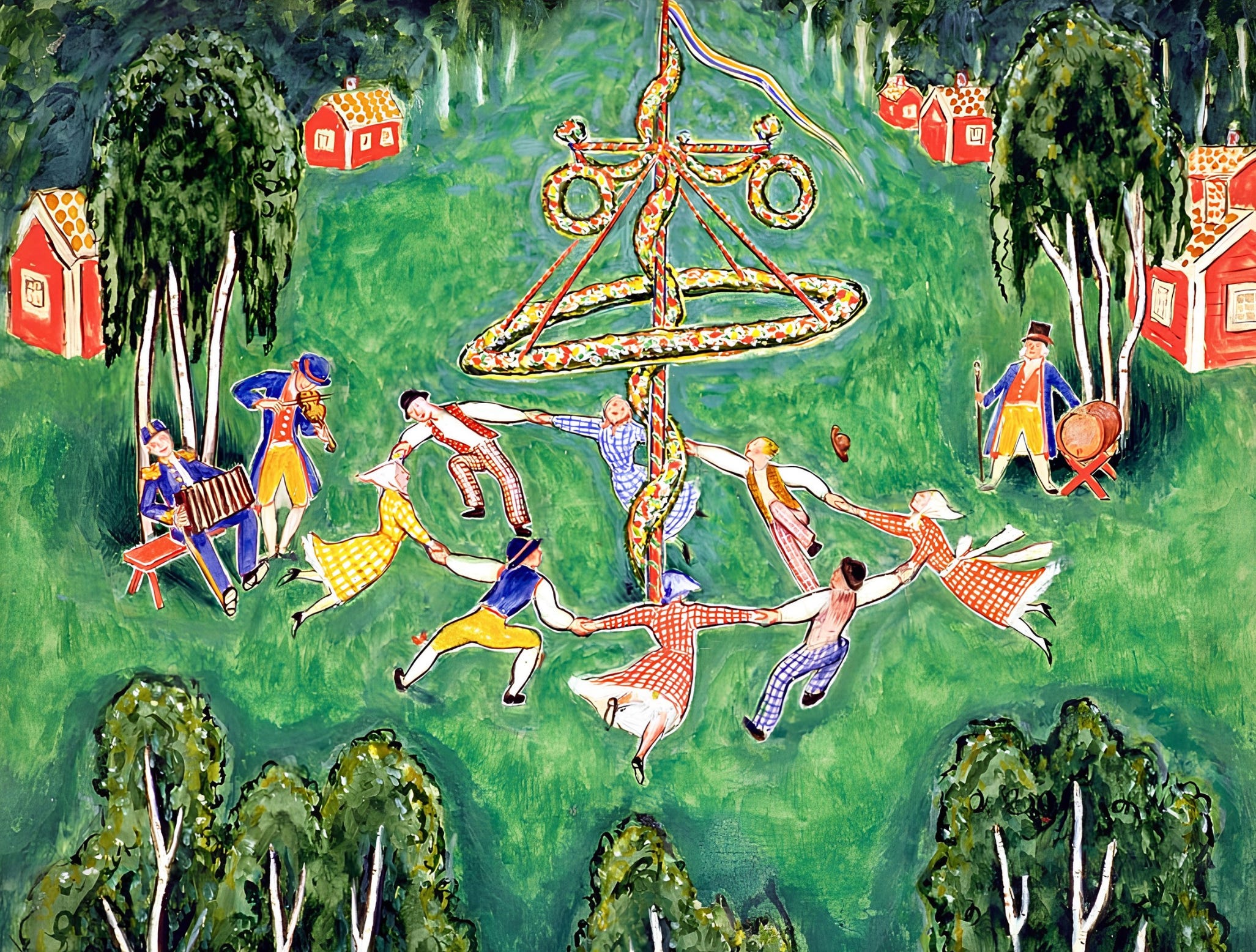
Reading books only for “professional development” furnishes you with many profane maxims or truisms as to how to live and think, depriving you of autonomy. Fiction and poetry help you paint the image of the world while crowning you as the sole sovereign artist of your life. The arts and humanities bestow depth upon your challenges, allowing you to contemplate them with complexity, gain psychological comfort, and access the power to add meaning.3
Of course, there’s a lot of bad fiction and poetry out there; I don’t want to be reductive and suggest that only old books are great. There are some lovely contemporary works I’ve stumbled across. In one of my next issues, I’ll share what books I’m (re)reading—philosophy, fiction, poetry—what I recommend and why. It will only be available to paid subscribers; some of these books are a bit controversial. You may subscribe on the web version easily.
Create dangerously
Finally, contemplation during fall leads to creative ecstasy in the sense that I gain clarity about my projects. I seek solitude more often and limit my social occasions to the people I love.
“You don’t get anything done,” Mark Baker wrote, “by being around people all the time.” Emil Cioran complained in his letters to his brother about having too many friends in Paris. He was too busy to write. He liked to flee to Dieppe, a small town and fishing port on the Normandy coast of northern France, every time he couldn’t focus properly. To be able to finish The Last Supper, Leonardo da Vinci got up early every morning to arrive at the monastery so he could be alone, in silence, with his own thoughts and feelings. Michel de Montaigne found intellectual refuge in his private library—which was located in the southern tower of his chateau. When they were quarantined because of pandemic outbreaks, Shakespeare wrote King Lear; Newton invented calculus, developed his theory on optics, and formulated the laws of motion and gravity. To discover that sense of sacredness at work, you need to give yourself space and time to be alone. Periods of solitude can paradoxically be liberating.
You face existential crises either when you’ve lost some of your mental strength lately, as a result of too many troubles, or when new powers are about to emerge violently.
Announcing the (soft) launch of my new cohort-based project. 25 spots available. Enrollment opens on November 5.
In reflection, the mind stands outside the phenomenon and interprets it. In contemplation, the mind enters the templum of the phenomenon and allows itself to be transformed by what is revealed.
The irony is that we always look back at the past with nostalgia, no matter how bad it was in many respects. We easily find the magic in the past. Why can’t we do the same with the present? Soon enough you will look back on this very moment with nostalgia. Don’t rob yourself of what you already have.
Beauty is then finally revealed. You’re thus healed. You won the battle. You avoided the war. You initiated peace. You fortified your soul.
Love this - thanks