
You don’t want peace, you want to deal with chaos peacefully
Scholars who only train in solitude are soft thinkers

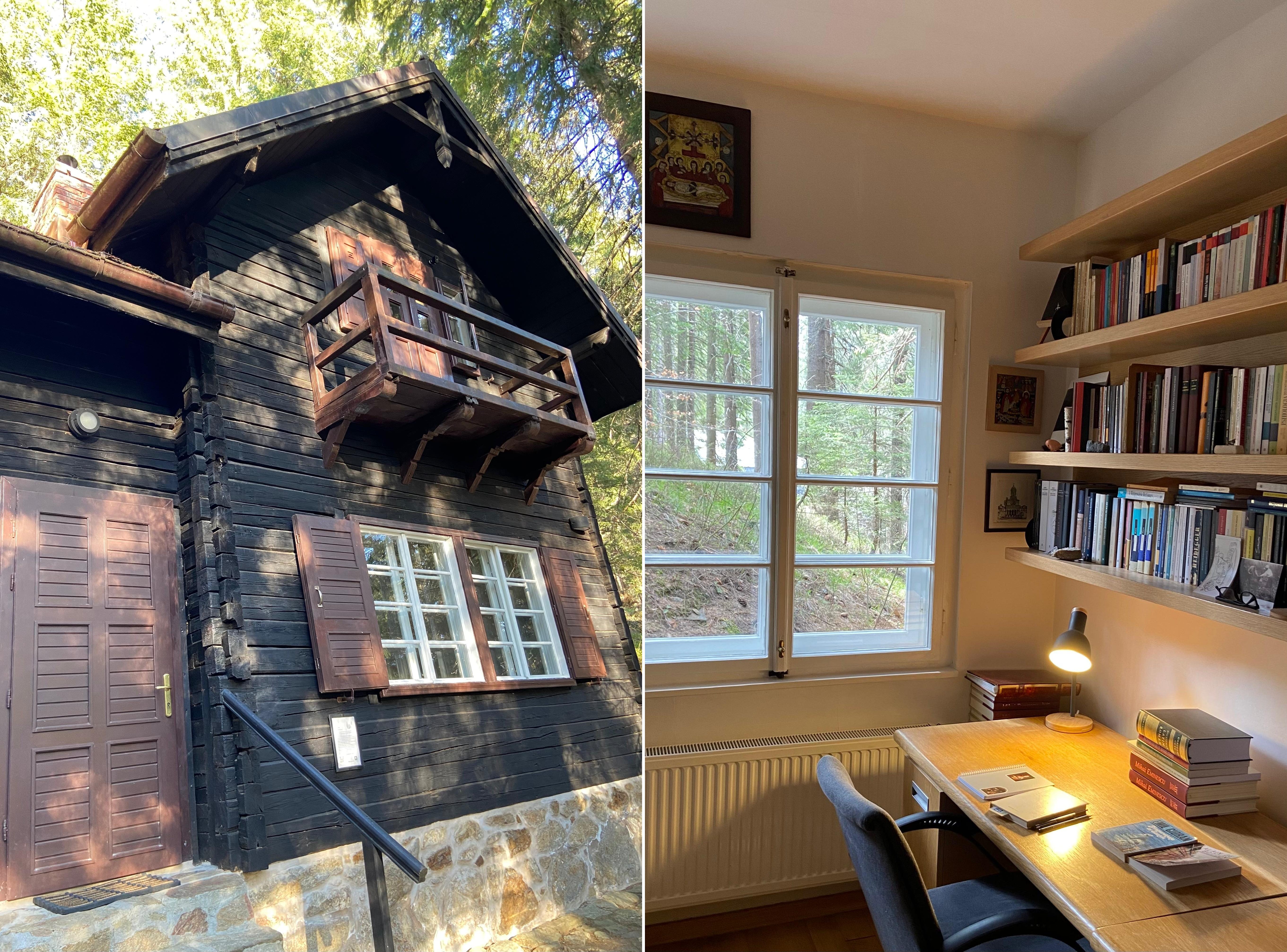
FOR THE LAST FEW DAYS, I’ve cherished my life by spending time in almost complete silence, relative solitude, no music, no distractions except old books, and minimum internet consumption. I’ve been reading, (hand)writing, and taking walks all week. I designed an intellectual retreat for myself, living deep in the Carpathian forests, at 1400m altitude, sleeping in a cottage built by Transylvanian Saxons during the interwar period… I could hear wild animals casually passing by during the night, always around 2AM, as if they were routinely going to work.1
Now I’m back home, writing this essay from my rather functional, unaesthetic attic in Brașov while listening to the rain. I’m able to keep the trend going: I still imbue my days with silence. I thus realize you’re quite fragile as an artist if you’re dependent on a place or context to create. Yet perhaps you need the that place-0 or context-0 which ignites introspection and contemplation in your psyche, gifting you not ideas but the beta version of an electrifying spiritual configuration; a “taste test” of the sacred… You’re finally capable to dream irrationally, unlocking intellectual ecstasy.
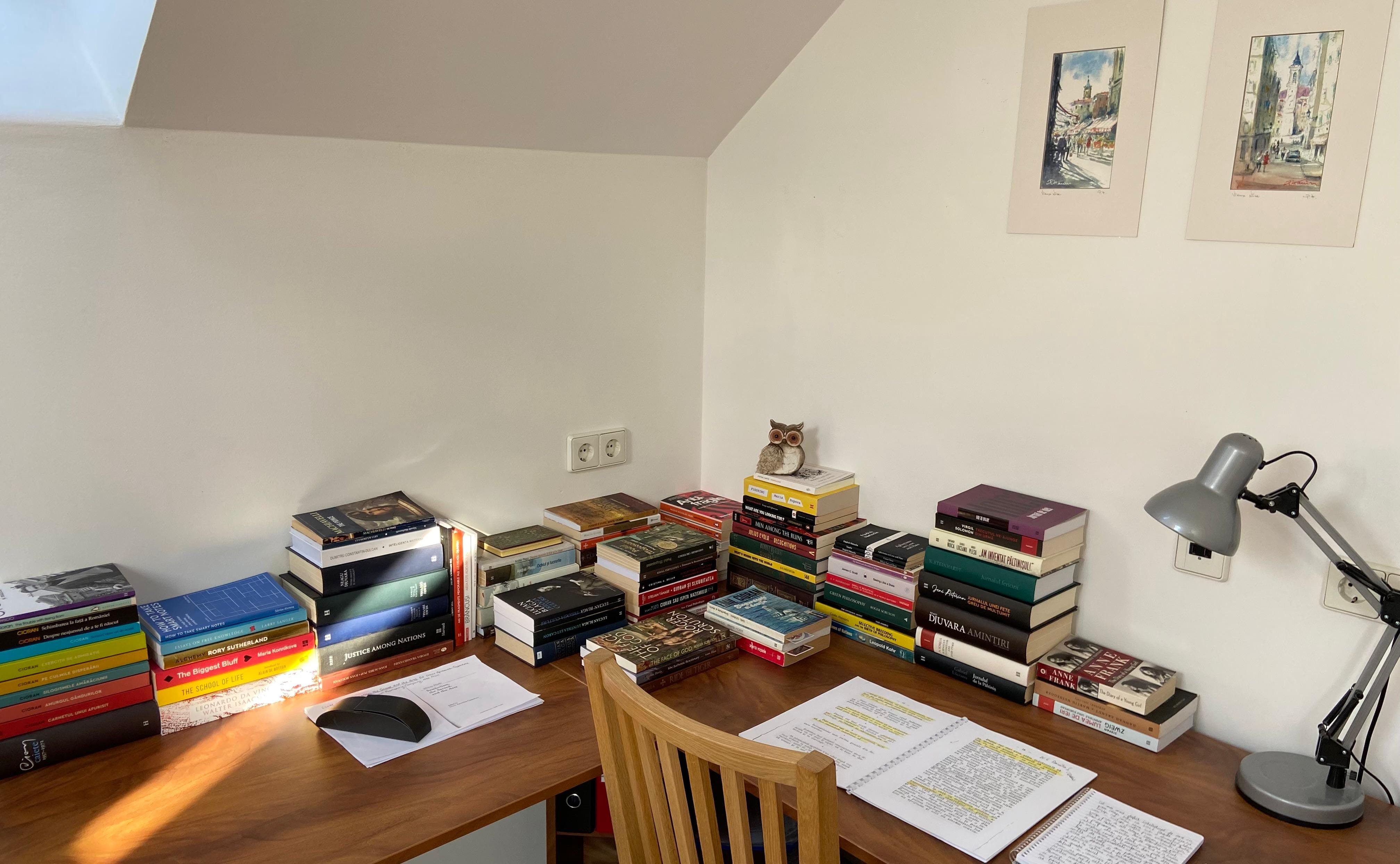
I’m reading 5 books and writing 3 essays simultaneously—gently educating myself to crystalize the divagations initiated in the Carpathians, likely titled Why Irreligious People Still Behave Religiously. Exactly like Eliade, I argue that all crises of modern men are religious crises, since they all stem from an awareness of a lack of meaning.2
“Such a deep silence surrounds me, that I think I hear moonbeams striking on the windows.” Lucian Blaga
Prior to this trip, I used to romanticize silence, mainly because—one revelation of my retreat—I’ve never truly experienced it. I used to romanticize solitude. But silence is deafening. Solitude is scary. This is the normal reaction of any innocent soul systematically conquered by the uses and abuses of mass-manufactured entertainment services. The tragic part is that I’ve unconsciously considered myself morally superior compared to the masses, that my addiction to noise, dopamine, distractions, etc. is mild and I shouldn’t care that much. This is the devil’s trap. This is how The Machine wins and successfully builds Brave New World. Not by organizing an army of hardcore addicts per se. The army is merely instrumental. The Machine wins by fooling seemingly decent people into perceiving themselves as morally superior, by annihilating those who boast some potential. How?
If the masses drink 15 glasses of whiskey/day and you drink “only” 3, it doesn’t mean you aren’t severely addicted too. The reason I wasn’t able to figure out that I’m an addict a priori is because we normalized this form of addiction to such an extent that the contrast bias wields some sort of demonic power. I hate silence. I hate solitude. I thought I already discovered my humanity. But, thanks to this trip, it dawned on me how far away from God (or Mother Nature, whatever your theology) I still am. Looking back at my behavior, I constantly looked for distractions but I found none. This was jarring and terribly unnerved me because after I was done reading, writing, and taking walks, I was forced out of necessity to turn inward. I thought I would find some dignity but instead I found chaos. I found a mess. Initially, the self-analysis seemed promising and likely to yield sophisticated results—I discovered nuanced thoughts, almost poetic, the sign of a well-read fellow. But underneath it all was just baroque BS, ornate language masking a complete lack of sincerity. I’m not impressed by my behavior in what’s supposed to be my natural habitat.
But here’s the really disturbing revelation. Not only did I figure out that my capacity to deal with peace and quiet is mediocre at best, but I also had to face the reality that solitude provides only temporary refuge. Being calm in silence should be easy. I’ve reached the level of spiritual intelligence where it’s not—but it should be. Scholars who only train in solitude are soft thinkers. Real spiritual practice begins when you enter the citadel, dealing with people every day, not in monk mode. At some point, it’s easy to meditate in a cave for several hours and find peace. But can you keep that peace when someone cuts you off in traffic and then screams that you’re the idiot, when state authorities treat you like a criminal, or when your baby or dog gets sick in the middle of the night?
A true artist is a paradox: deeply introspective and contemplative yet violently evolving spiritually at the same time. Thus they barely know themselves—they can’t understand themselves because their soul is a perpetual mystery, and they embrace it, they keep going despite uncertainty, this is their edge, they ride the most dangerous waves cheerfully. To want to understand yourself is noble but to postpone every project in your life until you have everything figured out is a terrible vice. Introspection, retrospection and contemplation, if anything, will simply improve your questions and doubts, elevating them, upgrading their depth and quality, but don’t expect answers. The fundamental questions may only be answered vaguely, and you must be content with that.3
About 65% of Europe’s virgin forests are located in Romania, largely Transylvania. Transylvania is the last truly wild and medieval Europe has to offer.
This essay will be available only to paid subscribers for 5 EUR/month.
There is a reason why solitary confinement is such a brutal punishment.
Humans are social beings, tribal and hierarchical by nature, directionally animated by story, symbols, and paradigms.
In my experience, knowing that this collectively is a base nature, and still cultivating an individual core, is the essence of a positive spiritual life.
And the only way to do this is to traverse the expanse between solo and social time, learning and growing from each moment the best we can.
Fantastic piece. True self-mastery and self-examination is only possible in the middle of the fight, the distractions, the noise, the human.